
Exploring the truth behind Draymond’s claims on the conclusion of NBA free agency
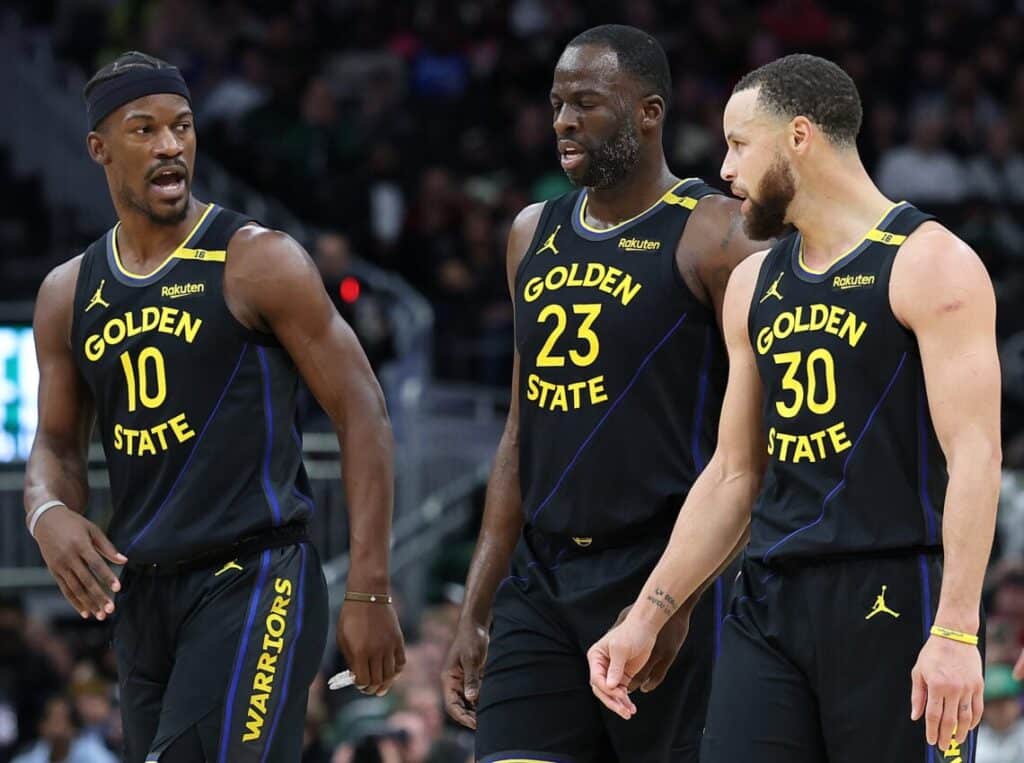
Exploring the Truth Behind Draymond’s Claims on the Conclusion of NBA Free Agency
One thing basketball fans look forward to every year is the chaos and drama of NBA free agency. But, according to Golden State Warriors forward Draymond Green, those days of sudden, blockbuster moves and high drama might be over. His comments have sparked heated debate throughout the league: Is NBA free agency really “dead,” or are we just seeing its next evolution?
The Spark: Draymond’s Bold Assertion
In July, just as teams and fans awaited the annual fireworks, Draymond Green posted his frustrations on Threads: “Baffled at the fact that NBA free agency is over. Quite frankly, it never really started. The level of anticipation leading up to July 1st was as exciting as the fireworks on the 4th … One can only point to the ‘New CBA’ and the 2nd apron for absolutely putting an end to Free Agency as we once knew it.”
What Changed? The Facts Behind the Claims
Several important shifts have altered the NBA’s free agency landscape. The 2023 collective bargaining agreement (CBA) introduced the notorious second apron: a hard cap on team spending, which seriously limits how high-spending franchises can flex their wallets. For players, options have shifted, too. The revised CBA made it easier to negotiate lucrative extensions, giving stars every incentive to stay put rather than test free agency.
Stats back it up: In just the first year under the current CBA, a record 14 players signed rookie extensions, with big names like Jalen Johnson, Alperen Sengun, and Jalen Suggs all inking deals before even reaching free agency. Over the past three years, 51 veterans signed extensions—up from 74 total between 2017 and 2023, a surge in team-friendly extensions and early decisions.
The Impact on the Market
Remember a time when July 1 meant waiting to see if LeBron, KD, or Kawhi would pick up the phone and shock the world? That buzz has faded. Stars like Kyrie Irving, Julius Randle, and Fred VanVleet were barely free agents at all, re-signing with their teams before June 30. The NBA’s own commissioner, Adam Silver, acknowledges this shift: “The mechanism of the collective bargaining agreement was very clear: We are trying to give incumbent teams an advantage to draft, develop, and keep players.”
Yet, despite the doom and gloom, the middle class of NBA players isn’t left out in the cold. In fact, 84% of players signed for between $4 and $20 million in first-year salary, an 8% increase from last offseason. Former NBPA President CJ McCollum confirms, “Guys are making more money than they ever have. The middle class is making more money than they ever have before.”
Stretch Provisions and Creative Cap Moves
With the second apron looming, teams have gotten creative with cap management. The use of the stretch provision—spreading out a waived contract for cap relief—has become a go-to move. This past month alone, teams stretched a whopping $223 million in salary, nearly reaching the entire total since the rule’s introduction in 2013.
For example, the Bucks waived and stretched $113 million owed to Damian Lillard, clearing the way to sign Myles Turner. Other teams, like Phoenix, are using this provision to avoid luxury tax purgatory, even if it means a $19.4 million cap hit for years to come.
Are Emerging Trends Here to Stay?
While Draymond has a point about the lack of summer drama, it’s not all doom and gloom. Rookie and veteran extensions are up, and teams retain their stars rather than risk losing them for nothing. The restricted free agent market is tight, with only a handful of sign-and-trade options available, further shrinking the window for big free-agent moves.
Meanwhile, teams like Oklahoma City have responded to new challenges by protecting themselves in contract structure and planning for the long term, stockpiling picks and signing cost-controlled deals without escalators tied to All-NBA honors. This kind of forward-thinking is becoming essential under the new CBA.
Voices from Around the League
Austin Rivers, a former NBA player, was among the first to criticize the impact on free agency: “You either make $50 million or $2 million. It’s a joke, bro. I can’t tell you how many midlevel guys are signing for the vet minimum around the NBA.” While that frustration is real for some, the data shows that, at least right now, the so-called NBA “middle class” is not being squeezed out of the market.
On another note, the league’s focus on smart spending has put a premium on basketball IQ—GMs must outthink their rivals, not just outspend them.
The Road Ahead for NBA Free Agency
NBA free agency isn’t dead, but it’s definitely changed. The league is rewarding teams for drafting and developing their own guys and making sure only the sharpest front offices thrive under tighter cap rules. Whether this makes for better basketball—or just less spectacle—depends on your perspective. But as always in the NBA, adaptability and forward planning look like the only true constants.
Source: www.espn.com